
Ecological Services for Commercial Projects in Tasmania
ECOtas has undertaken a wide range of ecological consultancy services for a number of clients from the public and private sectors in Tasmania. Some examples of the type of ecological assessments undertaken by ECOtas are described below.
Hobart City Council
Assessment of Austrodanthonia induta (tall wallabygrass) on proposed fire-trail
A short section of disused firetrail in the Ridgeway Park area required upgrading. Hobart City Council had already obtained a permit to disturb threatened plants (Austrodanthonia induta, a species of rare wallabygrass – now known as Rytidosperma indutum) but needed to meet reporting obligations under that permit. A detailed assessment of the trail and fringing forest was undertaken to provide a count of the number of plants likely to be disturbed.
Gunns Limited
Assessment of proposed forestry coupe SY005b at Storeys Creek for Prasophyllum stellatum
Gunns Limited were advised by the Forest Practices Authority that a specialist survey would be required for the endangered leek-orchid Prasophyllum stellatum (known as the ben lomond leek-orchid) for a patch of forest proposed for selective harvesting. The species was previously only known from the vicinity of the proposed coupe. A detailed assessment of the species was undertaken, and it was found to be relatively widespread within and adjacent to the proposed coupe. It was considered unlikely that the proposed harvesting would substantially impact the species, but the report was used by the Forest Practices Authority, the Threatened Species Section and Gunns Limited to develop appropriate management prescriptions.
The surveys undertaken were extended in a collaborative project between ECOtas, DPIPWE, Forestry Tasmania, Gunns Limited and the Forest Practices Authority – see the results here.
Wapstra, M., Roberts, N., Larcombe, M. & Leaman, T. (2011). Distribution, habitat characteristics and conservation management of Prasophyllum stellatum (Ben Lomond leek-orchid), a forest-dependent endangered species. Tasforests 19: 28-41. [pdf – ben lomond leek-orchid]
Department Of Primary Industries, Parks, Water & Environment (Threatened Species Section)
Preparation of species profiles for threatened species
As part of a project aligning the Tasmanian Threatened Species Protection Act 1995 and the Commonwealth Environment Protection and Biodiversity Conservation Act 1999, ECOtas was engaged by the Threatened Species Section to prepare several profiles of threatened flora and fauna. The species were mainly those endemic to Tasmania (e.g. live-bearing seastar) currently listed on the State legislation but not the Commonwealth legislation, or species listed on both Acts but at different levels (e.g. Critically Endangered on one Act, Vulnerable on the other). The project involved a detailed literature and database review, followed by the preparation of a species profile.
ECOtas has also produced over 100 formal Listing Statements under the Tasmanian Threatened Species Protection Act 1995. These can be seen at
www.dpipwe.tas.gov.au and include flora species, vertebrates and invertebrates.
Forest Practices Authority
Survey of forestry coupes for threatened orchids: Pterostylis atriola (snug greenhood) in BG034A
A State forest coupe in the State’s central north proposed for selective harvesting was known to support a high diversity of native orchid species. A detailed assessment showed that Pterostylis atriola (snug greenhood) was relatively widespread in the coupe, locally common and often associated with disturbed sites such as old tracks.
A monitoring program was designed and established to assess the longer-term response of Pterostylis atriola to forestry-related disturbance. Some parts of the population in the coupe have been excluded from timber harvesting, and others will be subject to standard forest harvesting techniques.
Read more on the project in the following reports:
ECOtas (Mark Wapstra) (2008). Report on the Establishment of Long-term Monitoring Sites for Pterostylis atriola in State Forest Coupe BG034A: ECOtas for Forest Practices Authority 27 February 2008. [download this article]
ECOtas (Mark Wapstra) (2007). An Assessment of the Significance of Proposed State Forest Coupe BG034A for Species of Native Orchid: ECOtas for Forest Practices Authority 20 September 2007. [download this article]
ECOtas continues to undertake research on Pterostylis atriola, now only listed as rare at the State level and no longer listed at the Commonwealth level, monitoring BG034A in various years and also sites in the Wielangta (east coast) forests.
Residential Subdivision Assessments
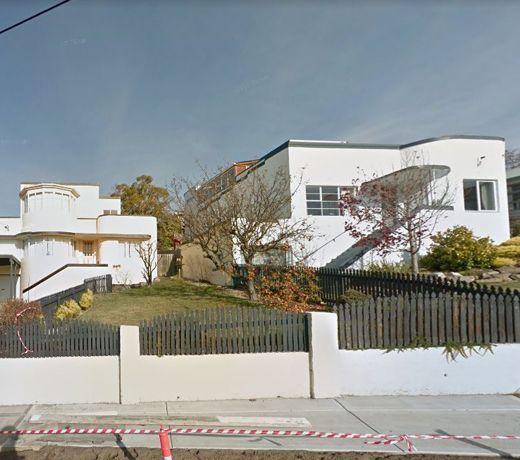
ECOtas has undertaken several assessments of private property proposed for subdivision. Proposals have ranged from single-lot developments to multiple hundred-lot developments. These assessments require a detailed examination of the ecological values present and a consideration of the possible impacts of the proposed development on these values in the local and wider area. Detailed mitigation proposals are often needed, taking into account various planning and legal requirements. ECOtas aims to find equitable and balanced solutions that satisfy the conservation management requirements of the identified values and allow the development proposal to be progressed.
ECOtas has extensive experience with working through the complexities and vagaries of the various Tasmanian planning schemes and municipal policies, preparing documents for and appearing at tribunal and commission hearings, and working to find solutions from a single tree to the whole of subdivision issues.
Mining Proposals
Mines present complex and often controversial projects requiring the consideration of various values. Often mines are proposed in sensitive areas and require careful management of high conservation values. ECOtas prides itself on working closely with the client and approval agencies to reach practical, pragmatic and reasonable solutions to identified issues.
Irrigation Schemes and Dams
ECOtas has undertaken several assessments of major irrigation proposals. These often cover large areas and cross numerous tenures, landforms and vegetation types. A 60 km pipeline route, for example, is likely to support several threatened flora and fauna species requiring the development of mitigation and offsets.
Walking Tracks
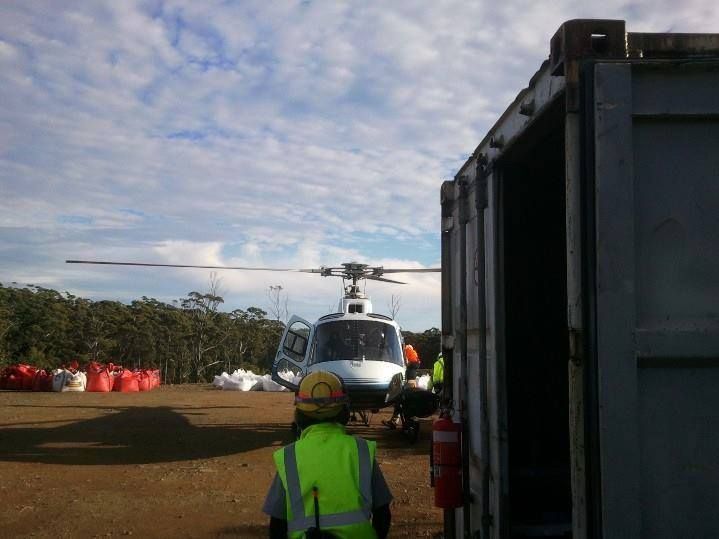
ECOtas has been the key ecological consultant assessing the Three Capes Track on the Tasman Peninsula, which has involved walking existing and proposed track routes, developing management prescriptions for threatened fauna and flora, consideration of source areas (e.g. gravel and rock quarries) and other ecological management issues such as fire. As with all projects, ECOtas maintains an objective approach to assessment and reporting: it is just that for this project, the scenery is spectacular and the transport options, such as helicopter and boat exciting, making my “office” a less than boring place to work!
Contact ECOtas to discuss your commercial ecological project with our expert team.